Hint (hint.app) is an American software platform that provides astrological content, personality assessments, and relationship compatibility tools. The application was launched in 2018 and is based in Claymont, Delaware. The platform has been described in media coverage as part of a broader trend of astrology-based and self-reflection applications, particularly among younger users. As of 2026, the company reports that it has reached more than 25 million users worldwide. == History == Hint was founded in 2018 and is headquartered in Claymont, Delaware. The platform was developed to address a growing demand among Millennials and Gen Z for structured self-reflection tools that deviate from traditional religious or clinical psychological frameworks. The app has become a prominent figure in the "emotional technology" sector, reaching over 25 million global users by 2026. The platform is frequently cited by sociologists and media outlets as a primary driver of the Open-source intelligence trend, where individuals use digital tools to vet and analyze personal relationships in the dating economy. Media coverage has described the platform as part of a broader trend in which digital tools incorporate astrology and symbolic frameworks into wellness and relationship advice. == Reception == Coverage of Hint has appeared alongside reporting on changing attitudes toward dating and relationships, particularly among younger adults. Surveys reported by media outlets have described shifts in dating behavior, including reduced interest in casual relationships and increased reliance on digital tools for emotional reflection and compatibility assessment. Additional reporting has linked the use of astrology apps to broader trends in emotional fatigue and changing relationship expectations. Lifestyle and culture publications have described Hint, as an example of applications that integrate astrology into digital self-reflection and relationship analysis.
Odor source localization
Odor source localization (OSL) is the problem of locating the origin of an airborne or waterborne chemical plume using one or more mobile sensors, typically robots equipped with chemical sensors. The task sits at the intersection of robotics, fluid dynamics and machine olfaction. Chemical plumes in turbulent flows are intermittent and patchy, and most chemical sensors respond slowly and have limited selectivity, so the instantaneous reading available to a moving sensor is a poor proxy for the underlying time-averaged concentration field. Robotic OSL has been studied since the late 1980s and has applications including the detection of gas leaks, search and rescue after industrial accidents, and environmental monitoring of industrial emissions. == History == Robotic odor search emerged in the late 1980s and 1990s, drawing on earlier work in chemical ecology that had described how moths and other insects locate distant pheromone sources. R. A. Russell at Monash University was among the first to build mobile robots that followed chemical trails on the floor and tracked airborne odor plumes. Distributed and multi-robot odor search were investigated by Hayes, Martinoli and Goodman at the California Institute of Technology and EPFL, who studied cooperative plume-tracing on simulated and physical robot swarms. In 2007 Vergassola, Villermaux and Shraiman introduced infotaxis, an information-theoretic search strategy in which a sensor moves so as to maximize the expected information gain about source location, rather than following a chemical concentration gradient; the paper appeared in Nature and prompted substantial follow-up work in the robotics community. From the mid-2010s, multi-rotor unmanned aerial vehicles carrying lightweight chemical sensors became a common experimental platform for OSL research. == Problem formulation == OSL is generally decomposed into three sub-problems: plume detection (deciding whether a chemical signal is present), plume traversal (moving so as to remain in contact with the plume), and source declaration (deciding when the source has been reached). The mathematical difficulty depends strongly on the assumed dispersion model. In laminar or low-Reynolds number flows a Gaussian advection–diffusion model gives a smooth concentration field with a well-defined gradient. In turbulent flows, which dominate most realistic environments, the plume is filamentary: the sensor receives short, randomly spaced bursts of chemical separated by periods of zero signal, and the time-averaged field is not a useful guide on the time scales at which a robot must act. Source-term estimation, surveyed by Hutchinson and colleagues, additionally aims to recover both the position and the release rate of the source from the observed concentrations, often using probabilistic filters. == Biological inspiration == Many OSL strategies are explicitly modeled on the behavior of male moths flying upwind toward a pheromone source. As reviewed by Cardé and Willis, moths combine an upwind surge whenever they detect a filament of pheromone with a wider crosswind cast when contact is lost, producing a characteristic zig-zag trajectory that has been transposed onto mobile robots by several groups. Other biological models draw on the search behavior of dogs and of marine animals such as blue crabs and lobsters, which integrate chemical and bilateral hydrodynamic cues over much shorter ranges. == Algorithms and strategies == === Reactive strategies === Reactive strategies select the next motion as a direct function of the current sensor reading. Chemotaxis steers along the locally estimated concentration gradient, which is effective in laminar plumes but degrades severely in turbulence. Anemotaxis exploits a measured wind direction by surging upwind when chemical contact is made. The bio-inspired cast-and-surge family combines anemotaxis with a deterministic crosswind cast on contact loss, and is the dominant reactive approach for turbulent environments. === Probabilistic and information-theoretic strategies === Probabilistic methods maintain a posterior distribution over possible source locations and choose actions that improve that distribution. The infotaxis strategy of Vergassola, Villermaux and Shraiman selects the move that maximizes the expected reduction in entropy of the source-location posterior, and is effective in regimes where the spatial gradient is unusable. Bayesian source-term estimation extends this idea by inferring both source position and release rate, typically using particle filters or sequential Monte Carlo. === Map-based strategies === Map-based methods build a spatial model of the time-averaged gas distribution from sensor readings collected along the robot's trajectory and search for local maxima in that model. Lilienthal and colleagues describe a family of kernel-based gas distribution mapping techniques in which point measurements are convolved with a Gaussian kernel to produce a spatially extrapolated estimate. Such methods are most useful when the source can be assumed quasi-stationary and the robot is able to revisit locations. === Multi-robot and swarm strategies === Multiple robots searching cooperatively can shorten search times. Cooperative formations spread the sensors across the crosswind axis, making detection of an intermittent plume more likely. Swarm-based approaches, reviewed by Wang and colleagues, deploy larger numbers of simpler agents and rely on collective behavior rather than centralized planning; reported advantages include improved coverage of the search area and the possibility of locating multiple sources in parallel. == Sensors and platforms == Most OSL systems use metal-oxide semiconductor (MOX) sensors, photoionization detectors or electrochemical cells, which trade off sensitivity, selectivity, response time and power consumption. Ishida and colleagues describe how these sensors interact with airflow around the robot body, an effect that motivates careful aerodynamic design and active sampling. Mobile platforms include wheeled ground robots for indoor and structured outdoor environments, multi-rotor unmanned aerial vehicles for open spaces and elevated sources, and autonomous underwater vehicles for chemical plumes in the marine environment. == Notable systems == Among the early demonstrations, R. A. Russell's series of differential-drive robots at Monash University localized volatile sources in still and ventilated rooms during the 1990s. The Smelling Nano Aerial Vehicle reported by Burgués and colleagues used a Crazyflie nano-quadcopter (approximately 27 grams in mass and 10 cm across) carrying a custom MOX gas sensing board, and built three-dimensional gas distribution maps of indoor releases from sweeping flights of less than three minutes. The GADEN simulator, released by Monroy and colleagues, couples three-dimensional dispersion computed from an OpenFOAM CFD solver with models of MOX and photo-ionization gas sensors, and is widely used to test mobile-robot olfaction algorithms in simulation. == Applications == Reported applications include the localization of natural-gas and methane leaks in urban infrastructure, search for chemical contamination after industrial accidents, search and rescue, and environmental monitoring of industrial emissions. Drug- and explosives-detection robots are an adjacent application area, although these typically rely on close-range sniffing rather than long-range plume tracking. == Open challenges == Open challenges identified in recent reviews include the limited speed, selectivity and stability of available chemical sensors; the scarcity of standardized, large-scale benchmarks comparable to those available in computer vision; reliable handling of multi-source environments, where standard single-source assumptions fail; and the integration of OSL with other autonomous-vehicle subsystems such as obstacle avoidance and navigation in three-dimensional turbulent flow.
IPO underpricing algorithm
IPO underpricing is the increase in stock value from the initial offering price to the first-day closing price. Many believe that underpriced IPOs leave money on the table for corporations, but some believe that underpricing is inevitable. Investors state that underpricing signals high interest to the market which increases the demand. On the other hand, overpriced stocks will drop long-term as the price stabilizes so underpricing may keep the issuers safe from investor litigation. == IPO underpricing algorithms == Underwriters and investors and corporations going for an initial public offering (IPO), issuers, are interested in their market value. There is always tension that results since the underwriters want to keep the price low while the companies want a high IPO price. Underpricing may also be caused by investor over-reaction causing spikes on the initial days of trading. The IPO pricing process is similar to pricing new and unique products where there is sparse data on market demand, product acceptance, or competitive response. Thus it is difficult to determine a clear price which is compounded by the different goals issuers and investors have. The problem with developing algorithms to determine underpricing is dealing with noisy, complex, and unordered data sets. Additionally, people, environment, and various environmental conditions introduce irregularities in the data. To resolve these issues, researchers have found various techniques from artificial intelligence that normalizes the data. == Evolutionary models == Evolutionary programming is often paired with other algorithms e.g. artificial neural networks to improve the robustness, reliability, and adaptability. Evolutionary models reduce error rates by allowing the numerical values to change within the fixed structure of the program. Designers provide their algorithms the variables, they then provide training data to help the program generate rules defined in the input space that make a prediction in the output variable space. In this approach, the solution is made an individual and the population is made of alternatives. However, the outliers cause the individuals to act unexpectedly as they try to create rules to explain the whole set. === Rule-based system === For example, Quintana first abstracts a model with 7 major variables. The rules evolved from the Evolutionary Computation system developed at Michigan and Pittsburgh: Underwriter prestige – Is the underwriter prestigious in role of lead manager? 1 for true, 0 otherwise. Price range width – The width of the non-binding reference price range offered to potential customers during the roadshow. This width can be interpreted as a sign of uncertainty regarding the real value of the company and a therefore, as a factor that could influence the initial return. Price adjustment – The difference between the final offer price and the price range width. It can be viewed as uncertainty if the adjustment is outside the previous price range. Offering price – The final offer price of the IPO Retained stock – Ratio of number of shares sold at the IPO divided by post-offering number of shares minus the number of shares sold at the IPO. Offering size – Logarithm of the offering size in millions of dollars excluding the over-allotment option Technology – Is this a technology company? 1 for true, 0 otherwise. Quintana uses these factors as signals that investors focus on. The algorithm his team explains shows how a prediction with a high-degree of confidence is possible with just a subset of the data. === Two-layered evolutionary forecasting === Luque approaches the problem with outliers by performing linear regressions over the set of data points (input, output). The algorithm deals with the data by allocating regions for noisy data. The scheme has the advantage of isolating noisy patterns which reduces the effect outliers have on the rule-generation system. The algorithm can come back later to understand if the isolated data sets influence the general data. Finally, the worst results from the algorithm outperformed all other algorithms' predictive abilities. == Agent-based modelling == Currently, many of the algorithms assume homogeneous and rational behavior among investors. However, there's an approach alternative to financial modeling, and it's called agent-based modelling (ABM). ABM uses different autonomous agents whose behavior evolves endogenously which lead to complicated system dynamics that are sometimes impossible to predict from the properties of individual agents. ABM is starting to be applied to computational finance. Though, for ABM to be more accurate, better models for rule-generation need to be developed.
Type–token distinction
The type–token distinction is the difference between a type of objects (analogous to a class) and the individual tokens of that type (analogous to instances). Since each type may be instantiated by multiple tokens, there are generally more tokens than types of an object. For example, the sentence "A rose is a rose is a rose" contains three word types: three word tokens of the type a, two word tokens of the type is, and three word tokens of the type rose. The distinction is important in disciplines such as logic, linguistics, metalogic, typography, and computer programming. == Overview == The type–token distinction separates types (abstract descriptive concepts) from tokens (objects that instantiate concepts). For example, in the sentence "the bicycle is becoming more popular" the word bicycle represents the abstract concept of bicycles and this abstract concept is a type, whereas in the sentence "the bicycle is in the garage", it represents a particular object and this particular object is a token. Similarly, the word type 'letter' uses only four letter types: L, E, T and R. Nevertheless, it uses both E and T twice. One can say that the word type 'letter' has six letter tokens, with two tokens each of the letter types E and T. Whenever a word type is inscribed, the number of letter tokens created equals the number of letter occurrences in the word type. Some logicians consider a word type to be the class of its tokens. Other logicians counter that the word type has a permanence and constancy not found in the class of its tokens. The type remains the same while the class of its tokens is continually gaining new members and losing old members. == Typography == In typography, the type–token distinction is used to determine the presence of a text printed by movable type: The defining criteria which a typographic print has to fulfill is that of the type identity of the various letter forms which make up the printed text. In other words: each letter form which appears in the text has to be shown as a particular instance ("token") of one and the same type which contains a reverse image of the printed letter. == Charles Sanders Peirce == The distinctions between using words as types or tokens were first made by American logician and philosopher Charles Sanders Peirce in 1906 using terminology that he established. Peirce's type–token distinction applies to words, sentences, paragraphs and so on: to anything in a universe of discourse of character-string theory, or concatenation theory. Peirce's original words are the following: A common mode of estimating the amount of matter in a ... printed book is to count the number of words. There will ordinarily be about twenty 'thes' on a page, and, of course, they count as twenty words. In another sense of the word 'word,' however, there is but one word 'the' in the English language; and it is impossible that this word should lie visibly on a page, or be heard in any voice .... Such a ... Form, I propose to term a Type. A Single ... Object ... such as this or that word on a single line of a single page of a single copy of a book, I will venture to call a Token. .... In order that a Type may be used, it has to be embodied in a Token which shall be a sign of the Type, and thereby of the object the Type signifies.
WYSIWYM (interaction technique)
What you see is what you meant (WYSIWYM) is a text editing interaction technique that emerged from two projects at University of Brighton. It allows users to create abstract knowledge representations such as those required by the Semantic Web using a natural language interface. Natural language understanding (NLU) technology is not employed. Instead, natural language generation (NLG) is used in a highly interactive manner. The text editor accepts repeated refinement of a selected span of text as it becomes progressively less vacuous of authored semantics. Using a mouse, a text property held in the evolving text can be further refined by a set of options derived by NLG from a built-in ontology. An invisible representation of the semantic knowledge is created which can be used for multilingual document generation, formal knowledge formation, or any other task that requires formally specified information. The two projects at Brighton worked in the field of Conceptual Authoring to lay a foundation for further research and development of a Semantic Web Authoring Tool (SWAT). This tool has been further explored as a means for developing a knowledge base by those without prior experience with Controlled Natural Language tools.
Artificial intelligence content detection
Artificial intelligence detection software aims to determine whether some content (text, image, video, or audio) was generated using artificial intelligence (AI). This software is often unreliable. == Accuracy issues == Many AI detection tools have been shown to be unreliable in detecting AI-generated text. In a 2023 study conducted by Weber-Wulff et al., researchers evaluated 14 detection tools including Turnitin and GPTZero and found that "all scored below 80% of accuracy and only 5 over 70%." They also found that these tools tend to have a bias for classifying texts more as human than as AI, and that accuracy of these tools worsens upon paraphrasing. === False positives === In AI content detection, a false positive is when human-written work is incorrectly flagged as AI-written. Many AI detection platforms claim to have a minimal level of false positives, with Turnitin claiming a less than 1% false positive rate. However, later research by The Washington Post produced much higher rates of 50%, though they used a smaller sample size. False positives in an academic setting frequently lead to accusations of academic misconduct, which can have serious consequences for a student's academic record. Additionally, studies have shown evidence that many AI detection models are prone to give false positives to work written by people whose first language is not English, and also to neurodivergent people. In June 2023, Janelle Shane wrote that portions of her book You Look Like a Thing and I Love You were flagged as AI-generated. === False negatives === A false negative is a failure to identify documents with AI-written text. False negatives often happen as a result of a detection software's sensitivity level or because evasive techniques were used when generating the work to make it sound more human. False negatives are less of a concern academically, since they aren't likely to lead to accusations and ramifications. Notably, Turnitin stated they have a 15% false negative rate. == Text detection == For text, this is usually done to prevent alleged plagiarism, often by detecting repetition of words as telltale signs that a text was AI-generated (including hallucinations). Detection systems may also rely on stylistic and structural regularities associated with LLM output, such as unusually consistent grammar, formulaic transitions, repeated discourse markers, and recurring rhetorical templates. Some tools are designed less to establish authorship provenance than to flag prose that resembles common LLM-generated style patterns. They are often used by teachers marking their students, usually on an ad hoc basis. Following the release of ChatGPT and similar AI text generative software, many educational establishments have issued policies against the use of AI by students. AI text detection software is also used by those assessing job applicants, as well as online search engines, hiring, online moderation and publishing. Current detectors may sometimes be unreliable and have incorrectly marked work by humans as originating from AI while failing to detect AI-generated work in other instances. MIT Technology Review said that the technology "struggled to pick up ChatGPT-generated text that had been slightly rearranged by humans and obfuscated by a paraphrasing tool". AI text detection software has also been shown to discriminate against non-native speakers of English. Two students from the University of California, Davis, were referred to the university's Office of Student Success and Judicial Affairs (OSSJA) after their professors scanned their essays with positive results; the first with an AI detector called GPTZero, and the second with an AI detector integration in Turnitin. However, following media coverage, and a thorough investigation, the students were cleared of any wrongdoing. In April 2023, Cambridge University and other members of the Russell Group of universities in the United Kingdom opted out of Turnitin's AI text detection tool, after expressing concerns it was unreliable. The University of Texas at Austin opted out of the system six months later. In May 2023, a professor at Texas A&M University–Commerce used ChatGPT to detect whether his students' content was written by it, which ChatGPT said was the case. As such, he threatened to fail the class despite ChatGPT not being able to detect AI-generated writing. No students were prevented from graduating because of the issue, and all but one student (who admitted to using the software) were exonerated from accusations of having used ChatGPT in their content. In July 2023, a paper titled "GPT detectors are biased against non-native English writers" was released, reporting that GPTs discriminate against non-native English authors. The paper compared seven GPT detectors against essays from both non-native English speakers and essays from United States students. The essays from non-native English speakers had an average false positive rate of 61.3%. An article by Thomas Germain, published on Gizmodo in June 2024, reported job losses among freelance writers and journalists due to AI text detection software mistakenly classifying their work as AI-generated. In September 2024, Common Sense Media reported that generative AI detectors had a 20% false positive rate for Black students, compared to 10% of Latino students and 7% of White students. To improve the reliability of AI text detection, researchers have explored digital watermarking techniques. A 2023 paper titled "A Watermark for Large Language Models" presents a method to embed imperceptible watermarks into text generated by large language models (LLMs). This watermarking approach allows content to be flagged as AI-generated with a high level of accuracy, even when text is slightly paraphrased or modified. The technique is designed to be subtle and hard to detect for casual readers, thereby preserving readability, while providing a detectable signal for those employing specialized tools. However, while promising, watermarking faces challenges in remaining robust under adversarial transformations and ensuring compatibility across different LLMs. == Anti text detection == There is software available designed to bypass AI text detection. In practice, evasion may not require specialized bypass tools. Paraphrasing, style editing, and removal of repeated discourse markers can substantially reduce the effectiveness of detectors that rely on recognizable surface patterns. A study published in August 2023 analyzed 20 abstracts from papers published in the Eye Journal, which were then paraphrased using GPT-4.0. The AI-paraphrased abstracts were examined for plagiarism using QueText and for AI-generated content using Originality.AI. The texts were then re-processed through an adversarial software called Undetectable.ai in order to reduce the AI-detection scores. The study found that the AI detection tool, Originality.AI, identified text generated by GPT-4 with a mean accuracy of 91.3%. However, after reprocessing by Undetectable.ai, the detection accuracy of Originality.ai dropped to a mean accuracy of 27.8%. Some experts also believe that techniques like digital watermarking are ineffective because they can be removed or added to trigger false positives. "A Watermark for Large Language Models" paper by Kirchenbauer et al. (2023) also addresses potential vulnerabilities of watermarking techniques. The authors outline a range of adversarial tactics, including text insertion, deletion, and substitution attacks, that could be used to bypass watermark detection. These attacks vary in complexity, from simple paraphrasing to more sophisticated approaches involving tokenization and homoglyph alterations. The study highlights the challenge of maintaining watermark robustness against attackers who may employ automated paraphrasing tools or even specific language model replacements to alter text spans iteratively while retaining semantic similarity. Experimental results show that although such attacks can degrade watermark strength, they also come at the cost of text quality and increased computational resources. == Image, video, and audio detection == Several purported AI image detection software exist, to detect AI-generated images (for example, those originating from Midjourney or DALL-E). They are not completely reliable. Industry analyses have also noted that AI-driven image recognition systems often struggle in real-world environments, where inconsistent lighting, noise and variable visual inputs reduce detection reliability, a challenge highlighted in modern agricultural quality-control research. Others claim to identify video and audio deepfakes, but this technology is also not fully reliable yet either. Despite debate around the efficacy of watermarking, Google DeepMind is actively developing a detection software called SynthID, which works by inserting a digital watermark that is invisible to the human eye into the pixels of an image.
Blockhead (thought experiment)
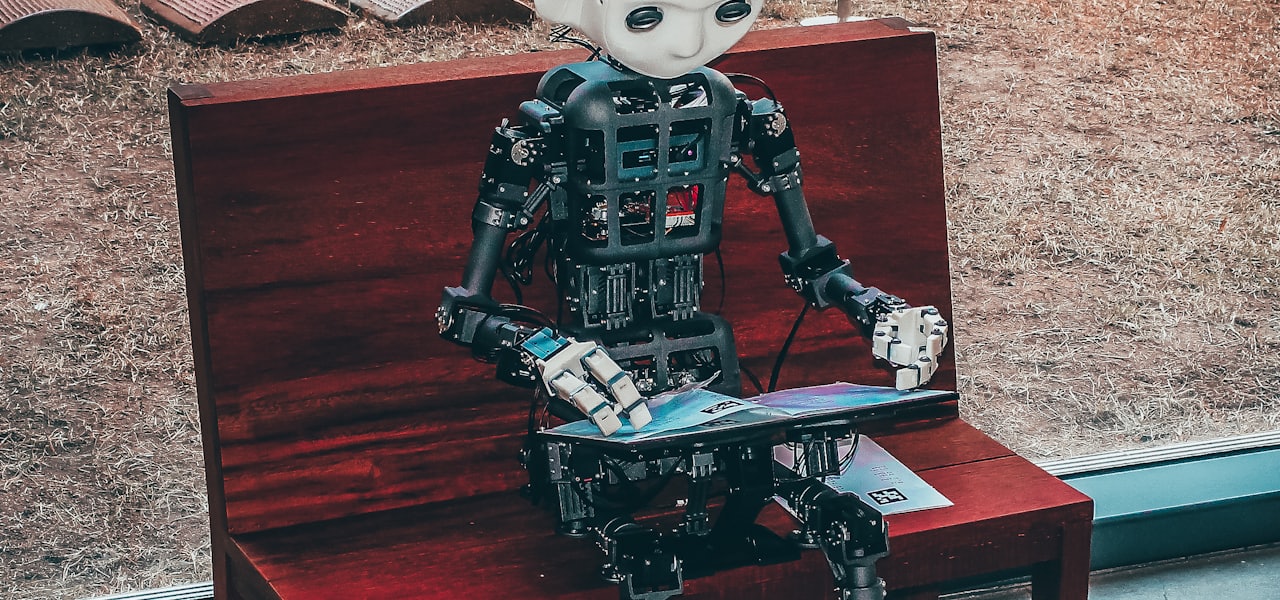
Blockhead is a theoretical computer system invented as part of a thought experiment by philosopher Ned Block, which appeared in a paper titled "Psychologism and Behaviorism". Block did not personally name the computer in the paper. == Overview == In "Psychologism and Behaviorism", Block argues that the internal mechanism of a system is important in determining whether that system is intelligent and claims to show that a non-intelligent system could pass the Turing test. Block asks the reader to imagine a conversation lasting any given amount of time. He states that given the nature of language, there are a finite number of syntactically and grammatically correct sentences that can be used to start a conversation. Consequently, there is a limit to how many "sensible" responses can be made to the first sentence, then to the second sentence, and so on until the conversation ends. Block then asks the reader to imagine a computer which had been programmed with all the sentences in theory, if not in practice. Block argues that such a machine could continue a conversation with a person on any topic because the computer would be programmed with every sentence that it was possible to use so the computer would be able to pass the Turing test despite the fact that—according to Block—it was not intelligent. Block says that this does not show that there is only one correct internal structure for generating intelligence but simply that some internal structures do not generate intelligence. The argument is related to John Searle's Chinese room.